Lona
The Deer KingLona, the chief priest-doctor to the provincial governor, is a quiet but consequential figure in the conflict between Pure Heart Creed medicine and Otawalle medical practice. He serves within a religious system that treats medicine as sacred duty, yet his conduct is marked by candor, humility, and a willingness to make room for unfamiliar knowledge. He protects Hohsalle’s work in the province and supports seeking help during the black wolf fever outbreak, even as his own account of medicine reveals how far the two traditions differ.
Position and Medical Tradition
In Zol, physicians are revered as “the fingers of the god,” and priest-doctors are expected to follow the Pure Heart Creed. When they judge an illness incurable, accepted practice is to entrust the patient to divine care and offer medicines to ease the passage toward death. This religious framework makes treatment more than a technical question: the doctor’s duty is bound to teachings about purity, the soul, and the limits of human intervention.
Lona holds the senior medical position in the provincial governor’s household, but he is not presented as a simple enforcer of the priest-doctors’ authority. His expression is described as still and difficult to read, and his manner is taciturn. Hohsalle recognizes that the two men’s disagreement is not merely a contest over status. At their most direct exchange, Lona articulates a conception of care centered on the soul and on living well within the life one has been given, rather than extending life in what the creed regards as a defiled body. That principle places him at odds with preventive medicine even when the proposed intervention could avert disease.
The Governor’s Illness and Lona’s Admission
Lona once misdiagnosed a condition that left the governor critically ill. Hohsalle saved the governor’s life, but did not disclose Lona’s mistake or use it to displace him. Once Lona understood that his error had endangered the governor, he asked for an audience and confessed, despite knowing that such an admission could cost him his life. His response establishes that his loyalty to his office does not outweigh his responsibility to acknowledge a medical failure.
The governor valued Lona’s resistance to pressure from the imperial court’s priest-doctors and asked him to remain in service. Lona accepted after careful consideration. He did not complain about the governor’s reliance on Hohsalle or the privileges Hohsalle received, and he did not report those arrangements to the imperial association of priest-doctors. His restraint helped Hohsalle practice medicine with unusual freedom in the province. The relationship is therefore reciprocal: Hohsalle’s silence had protected Lona after the misdiagnosis, while Lona’s discretion later protected Hohsalle from institutional interference.
The Outbreak and a Measure of Cooperation
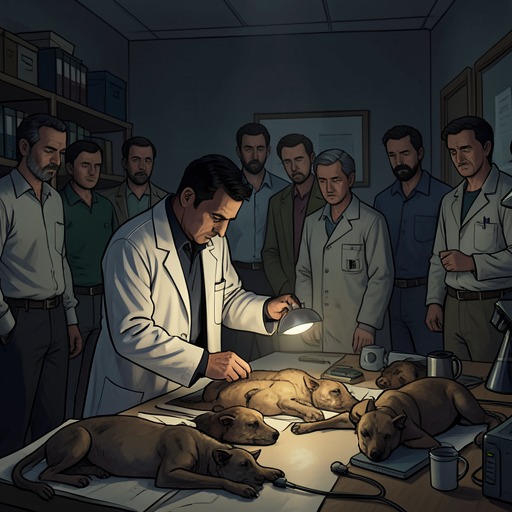
When black wolf fever is discovered among the dead workers from the salt mine, Lona’s position matters to the response. Hohsalle seeks permission to take thirty bodies, including those with a thin film of ice on them, to his clinic in Kazan for investigation. Yotalu agrees and is confident Lona will not interfere. Hohsalle nevertheless expects that Lona will have to report the grave event to his superiors, distinguishing local cooperation from the obligations imposed by the priest-doctors’ hierarchy.
As the outbreak develops, the governor and his eldest son, Utalu, are away at a conference with the emperor, while Yotalu receives their warning that mishandling the disease could bring disaster. Hohsalle has held back from notifying the Sacred Territory until he has the governor’s permission. Yotalu says both he and Lona welcome Otawalle assistance because they lack knowledge of the disease, and reports that Lona advised him to consult Hohsalle first. This support is practical but significant: Lona helps create room for collaboration rather than treating outside medicine as automatically forbidden.
Lona’s position is not identical to Utalu’s more confident appeal to religious orthodoxy. When Utalu asserts that faithful observance should protect the nobility from rabies, Lona answers that obedience to the teachings is difficult and that nobles may still become infected. He further explains that defilement can enter a person regardless of intention and may only become apparent once illness begins. His reply challenges the comforting idea that social rank or piety guarantees immunity, while still expressing disease through the creed’s language of defilement.
The Limits of Shared Ground
Hohsalle tests the possibility of a deeper agreement by asking whether Pure Heart Creed medicine would reject a way to prevent rabies and thereby decline to save a life. Lona listens, then explains that priest-doctors seek to save the human soul: all living things die, and the quality of a person’s allotted existence matters more than its length. They strive to live purely and peacefully rather than prolonging a stay in bodies they understand as defiled.
The exchange changes Hohsalle’s understanding of the dispute. He had taken earlier conflicts to arise chiefly from political friction and priest-doctors’ desire to protect their authority. Lona’s explanation exposes a more fundamental division: Otawalle medicine investigates causes and seeks ways to prevent or combat disease, whereas Pure Heart Creed medicine does not regard identifying the disease’s cause as essential to caring for the patient. Lona’s answer is not framed as personal hostility to Hohsalle. It is a faithful statement of a different premise, one that makes agreement over inoculation exceptionally difficult.
The contrast appears again when Mana, a priest-doctor, declines Hohsalle’s offer to show him the tiny organisms believed to cause disease. Mana says that observing patients is sufficient: the organisms are another way of describing defilement, and the physician’s task is to identify and remove the obstacles visible in the body, not to classify the invading cause. Lona’s teaching belongs to this wider difference in medical method. Where Otawalle researchers would examine agents, develop weakened agents, and seek treatments or serum, the creed’s approach begins from the patient and the spiritual meaning of illness.
Character and Significance
Lona complicates the idea that religious authority operates only through self-interest. Hohsalle’s grandfather, Limuelle, recognizes that Pure Heart Creed medicine can bind Otawalle practitioners and restrict the spread of their knowledge; he hopes that bringing priest-doctors to their side could loosen those constraints and open access to resources. Yet Lona’s own conduct is not reducible to defending power. He confesses his error when concealment might protect him, tolerates the governor’s special trust in Hohsalle, and counsels Yotalu to seek expertise that his household does not possess.
At the same time, personal integrity does not dissolve the conflict between the systems. Lona can cooperate over an emergency and still hold a doctrine that rejects the premise behind preventive intervention. His role makes the difference legible at both institutional and human scales: the outbreak requires practical cooperation, while the conversation about rabies reveals that the two medical traditions disagree over what a physician is trying to save and what counts as knowledge. The narrative leaves Lona within that tension, a conscientious priest-doctor whose openness to consultation does not amount to abandoning his creed.